The Invasive Species in the Sanctuary: How the NAR Thrives in Spiritual Drought
How does the New Apostolic Reformation take root in local churches? Explore the garden analogy: why spiritual drought fuels NAR expansion and how leadership can restore biblically sound soil.

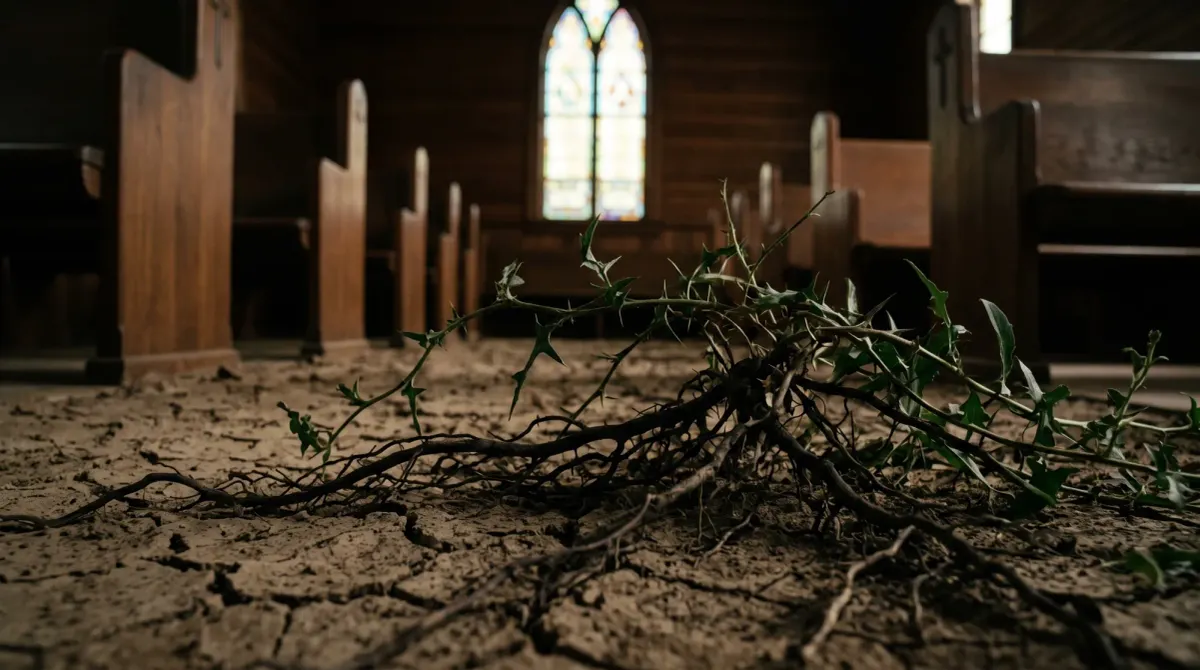
If you have ever attempted to maintain a garden, you know that weeds do not ask for permission to enter. They do not arrive with a warning label or announce their intention to take over the bed. Instead, they exploit a moment of neglect, a drop in soil quality, or a prolonged dry spell.
While your cultivated plants—delicate, intentional, and dependent on consistent watering—begin to wither, invasive weeds flourish. They push deep taproots into the parched earth, draw up whatever moisture remains far beneath the surface, and rapidly blanket the bare soil. Before you realize what has happened, the plants you intended to grow have been choked out.
In modern Christianity, the New Apostolic Reformation (NAR) operates as an invasive weed in the garden of the Church. Understanding how this movement takes root, spreads, and covertly displaces historic orthodoxy requires looking at the spiritual conditions that allow it to grow: specifically, the widespread drought of biblical illiteracy.
1. The Anatomy of an Invasive Species
Invasive weeds are not merely pesky; they possess specific characteristics that make them destructive to native ecosystems. The NAR shares these exact traits:
- Mimicry: Many invasive plants (such as barnyard grass) look nearly identical to desirable crops in their early stages. The NAR rarely enters a church declaring a brand-new religion. It enters through familiar worship music, uplifting terminology, and traditional-sounding language. On the surface, it sounds orthodox—until its roots are too deep to easily pull out.
- Prolific Seed Dispersal: Invasive species do not rely on local, orderly reproduction; they drop thousands of wind-borne seeds or produce clingy burs. The NAR propagates through high-virality media, global worship brands, podcasts, conferences, and self-published books, bypassing traditional denominational accountability entirely.
- Deep Taproots: Weeds do not remain on the surface. They establish extensive subterranean rhizomes. Similarly, the NAR establishes structural networks—such as Apostolic Governance models and regional "prayer nets"—that bind church leadership into centralized, top-down authority structures.
2. Spiritual Drought: The Soil Condition the NAR Requires
Why does the NAR grow so rapidly in some churches while failing to gain a foothold in others? The answer lies in the soil.
Weeds do not thrive in a complete absence of water—all plants require moisture to live—but they outcompete healthy crops during times of drought.
Cultivated garden plants rely on rich compost and steady irrigation. When water dries up, their growth stalls, their leaves drop, and their shallow root systems fail. Invasive weeds, built for harsh conditions, capitalize on this exact moment. Their aggressive taproots drive deep into the ground to draw on subterranean moisture, while their spreading leaves choke out the weakened plants around them.
       HEALTHY GARDEN                       SPIRITUAL DROUGHT
 (Systematic Biblical Teaching)          (Biblical Illiteracy)
 ┌───────────────────────────┐           ┌───────────────────────────┐
 │ Deep-rooted doctrine      │           │ Shallow biblical knowledge│
 │ Healthy discernment       │   ─────►  │ Exposed, unmaintained soil│
 │ Thick canopy blocks weeds │           │ High craving for novelty  │
 └───────────────────────────┘           └───────────────────────────┘
               │                                       │
               ▼                                       ▼
    Invasive seeds cannot                 NAR teachings take root
       find a foothold                         and spread rapidly
In the Church, biblical illiteracy is the spiritual drought.
When a congregation stops engaging in systematic, expository scripture study, historic creeds, and deep theological reflection, a void is created. The soil of the church becomes parched and unmaintained. While believers still possess a natural, God-given hunger for supernatural reality, direct connection with God, and spiritual purpose, shallow biblical teaching leaves them unable to satisfy that hunger through the Word.
The NAR steps directly into this drought. It offers immediate, experiential "water"—personal prophecies, promises of dramatic breakthrough, constant signs and wonders, and direct revelations—to spiritually thirsty Christians who have not been taught how to test the spirits against Scripture.
3. How the Weed Chokes Out the Crop
Once an invasive weed establishes itself in dry soil, it changes the ecosystem around it. The NAR alters church life in three primary ways:
A. Displacing Sola Scriptura with Direct Revelation
In a healthy church, Scripture is the final, sufficient authority for faith and practice. As NAR doctrine takes root through modern "apostolic" and "prophetic" figures, the authoritative weight subtly shifts from the written Word of God to ongoing, extra-biblical revelations. Scripture is no longer treated as the sufficient foundation, but merely as a jumping-off point for new, direct divine directives.
B. Overriding Elder Plurality with Apostolic Governance
Historic biblical church governance relies on a plurality of qualified elders who hold one another accountable under Scripture. The NAR replaces this model with an alignment framework: local pastors and churches must "align" under a recognized apostle to unlock spiritual authority and protection. This concentrated authority makes the movement nearly impossible to correct from within.
C. Replacing Patient Discipleship with High-Stakes Triumphalism
Healthy Christian growth is often quiet, steady, and patient—like a crop slowly bearing fruit over time. The NAR replaces this ordinary path of discipleship with an urgent, high-stakes narrative: taking dominion over societal spheres (the Seven Mountain Mandate), ushering in physical kingdoms, and achieving personal spiritual dominance. The quiet duties of daily Christian living are crowded out by an unending search for the next "massive spiritual shift."
4. Root Extraction: How to Cleanse the Garden
You cannot eliminate an invasive weed by merely shearing off the top. Mowing over a dandelion leaves the taproot intact, ensuring it will regrow stronger than before. Correcting individual bad prophecies or odd manifestations in a church setting is just cutting off the leaves; true remediation requires digging out the root.
                  ┌─────────────────────────────────────────┐
                  │          SURFACE MANIFESTATIONS         │
                  │   (Odd prophecies, sensationalism)      │
                  └────────────────────┬────────────────────┘
                                       │  Shearing this off
                                       │  only gives temporary
                                       │  relief.
                                       ▼
                  ┌─────────────────────────────────────────┐
                  │            THE TAPROOT                  │
                  │  (Unchallengeable Apostolic Authority & │
                  │     Extra-Biblical Direct Revelation)   │
                  └─────────────────────────────────────────┘
To remediate a church or personal faith impacted by NAR influence, three steps are essential:
- Extract the Root (Challenge the Authority Model): Pointing out specific absurd claims is insufficient. You must address the underlying claim to unchallengeable, direct divine revelation given to modern apostles and prophets. Re-establish the absolute sufficiency and final authority of Scripture.
- Irrigate the Soil (Restore Expository Teaching): End the drought. The most effective long-term defense against false doctrine is rich, systematic, verse-by-verse teaching of God’s Word. When believers are well-fed on Scripture, false teachings stand out immediately.
- Overseed with Healthy Practice (Fill the Experiential Void): Do not leave the ground bare. Replace sensationalism with robust, biblical prayer, vibrant community, order in spiritual life, and genuine fellowship. A thick canopy of healthy Christian practice leaves no physical or spiritual room for invasive species to catch light.
Conclusion: Guarding the Bed
A garden left to itself will eventually succumb to whatever seeds blow in on the wind. Guarding the local church—and our own hearts—requires active, discerning leadership that pays attention to both the quality of the teaching and the health of the soil.
If we want to keep the "Trojan Horse" of the New Apostolic Reformation from invading our sanctuaries, we must do more than just point out the horse. We must tend the garden, irrigate the soil with the Word of God, and pull up false authority structures by the root before they choke out the genuine fruit of the Gospel.
Action Steps:
Subscribe: Join other watchmen who receive these deep dives directly in their inbox.
This research is 100% viewer-supported. If this article helped you, consider partnering with our mission to help us keep the lights on.