SIGNS OF A TRUE APOSTLE: What 2 Corinthians 12:12 Actually Says
What are the biblical marks of a true apostle? In Part 3 of our Four12 investigation, we examine 2 Corinthians 12:12 to ask whether modern apostolic claims align with Scripture or redefine what an apostle actually is.

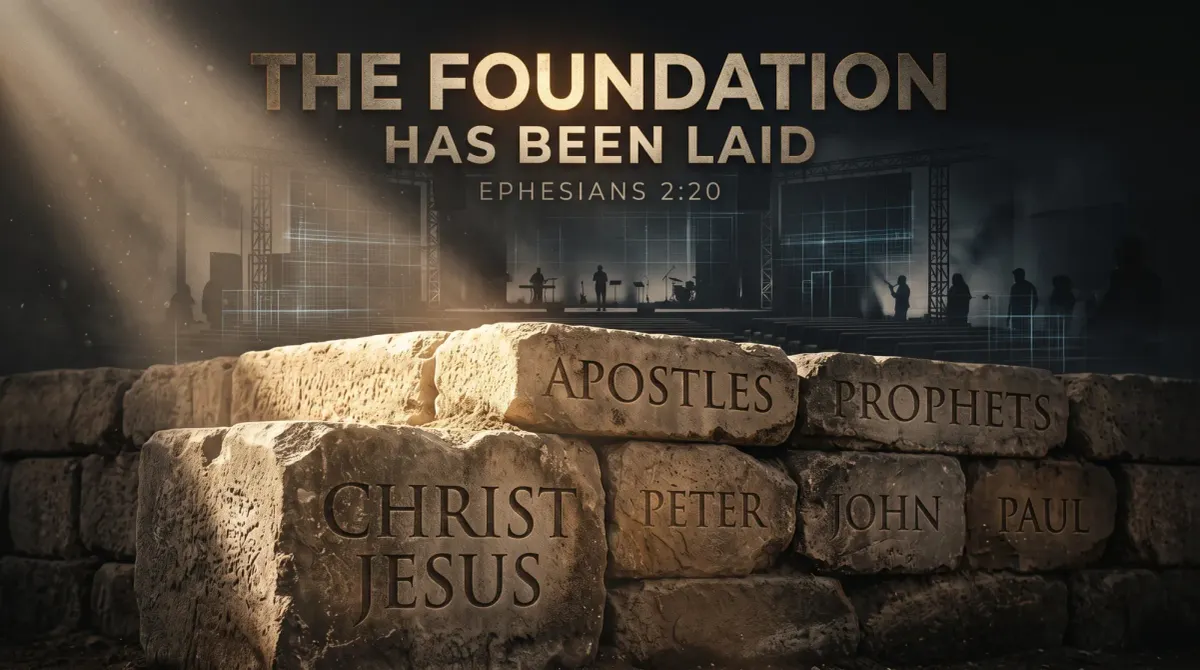
Part 3 of the Four12 Apostolic Authority Investigation

Paul Gives Us a Test
There is a remarkable statement in Paul's second letter to the Corinthians:
“The signs of a true apostle were performed among you with utmost patience, with signs and wonders and mighty works.”
— 2 Corinthians 12:12
Paul does not merely tell the Corinthians that he is an apostle.
He points to evidence.
That creates an important question for any movement claiming a continuing apostolic office:
What are the biblical signs of a true apostle, and should they still be expected today?
Four12 explicitly teaches that present-day apostles exist, while also distinguishing them from the original apostles of the New Testament.
That makes Paul's statement especially relevant.
If modern apostles are different, what exactly remains that makes them apostles?
Paul's Situation in Corinth
Paul's statement cannot be separated from its context.
The Corinthian church had been exposed to competing claims of authority.
Paul's apostleship had been challenged.
His opponents presented themselves as impressive spiritual leaders.
Earlier in the letter, Paul describes certain people as:
“false apostles, deceitful workmen, disguising themselves as apostles of Christ.”
— 2 Corinthians 11:13
That is sobering.
The New Testament does not assume that everyone who claims apostolic authority should be trusted.
It assumes the opposite.
Apostolic claims can be false.
Paul Does Not Say “Believe Me Because I Have the Title”
Instead, Paul points to evidence.
The phrase “signs of a true apostle” is important because Paul presents apostolic authenticity as something that can be distinguished.
He then identifies:
- signs;
- wonders;
- mighty works;
- and patience/endurance.
The supernatural element should not be ignored simply because modern readers may find it uncomfortable.
Paul deliberately includes it.
Miracles Are Not the Entire Test
This does not mean:
Anyone who performs a miracle is automatically an apostle.
The New Testament never teaches that.
Jesus warned that extraordinary supernatural claims could accompany deception.
Paul himself describes false apostles as people capable of disguising themselves.
Therefore miracles alone cannot authenticate a leader.
The biblical test is broader.
Doctrine matters.
Character matters.
Fruit matters.
Faithfulness to Christ matters.
But neither should we remove supernatural signs from Paul's description simply because they create difficulty for modern claims.
What Did Paul Mean by “Signs”?
The Greek word translated “signs” refers to signs or indications.
In Paul's argument, these were not simply impressive church-growth statistics.
He specifically associates them with:
“signs and wonders and mighty works.”
This is extraordinary language.
The New Testament apostolic ministry repeatedly contains supernatural manifestations connected with the proclamation of Christ.
Consider the book of Acts.
Peter and John heal.
Paul performs extraordinary signs.
The apostles confront demonic powers.
The gospel advances amid demonstrations of God's power.
This does not mean every apostle performed identical miracles at every moment.
But it does mean that apostolic ministry in the New Testament was not merely a sophisticated form of organizational leadership.
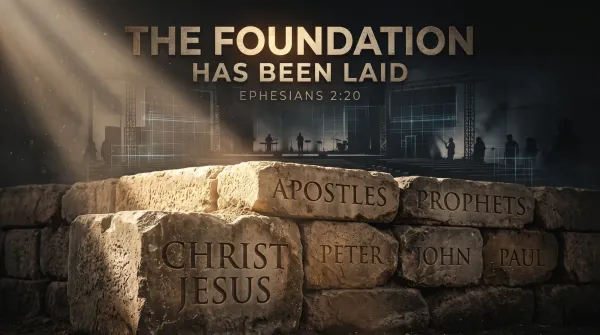
The “Master Builder” Question
Four12 describes apostles using the language of building.
Its published material describes the apostolic as central to how churches were built in the New Testament and describes apostles as involved in establishing churches according to biblical foundations.
That language has a biblical basis.
Paul himself described his apostolic ministry in construction terms.
He wrote:
“Like a skilled master builder I laid a foundation.”
— 1 Corinthians 3:10
But the same Paul who uses “master builder” language also speaks about the signs of a true apostle.
Therefore the biblical concept of an apostle is broader than:
“Someone who builds churches.”
Church planting alone cannot establish apostleship.
Otherwise almost every successful church planter could potentially claim the title.
International Ministry Is Not the Same as Apostleship
Modern Christian leaders may travel extensively.
They may preach in multiple countries.
They may establish churches.
They may train pastors.
They may advise leaders.
They may influence movements.
None of these activities automatically makes someone an apostle.
Paul traveled extensively because he was an apostle.
But traveling extensively did not make Paul an apostle.
The direction of the argument matters.
Apostolic ministry produced translocal activity; translocal activity did not create apostleship.
This distinction is often overlooked.
What About Present-Day Apostles?
Four12's position is explicit that modern apostles differ from the original apostles.
That means we should not unfairly demand that every present-day apostle duplicate every circumstance of Peter or Paul.
But a serious theological question remains:
What biblical feature makes the modern office recognizably apostolic?
If the answer is:
- church planting;
- leadership;
- translocal ministry;
- doctrinal safeguarding;
- equipping saints;
- partnership;
- governance;
then we must ask why those activities necessarily require the title apostle.
Many New Testament ministries involved teaching, leadership, evangelism, shepherding, missionary work and church planting.
The distinctive apostolic claim therefore requires something more.
The Problem of Redefinition
There is a potential circular argument that must be avoided.
It works like this:
- The New Testament apostles possessed extraordinary authority.
- Modern apostles are different.
- Therefore modern apostles do not need the same qualifications.
- Their ministry is defined by a different set of criteria.
- Because they meet those criteria, they are apostles.
But step four is the crucial issue.
Who established the new criteria?
If Scripture establishes them, they should be shown.
If Scripture does not establish them, then the definition may be theological invention rather than biblical doctrine.
This is why the distinction between “original apostles” and “present-day apostles” cannot simply be asserted.
It must be demonstrated.
What About Barnabas?
A careful investigation must also deal honestly with passages that complicate cessationist arguments.
Barnabas is called an apostle in Acts 14:14.
That proves that the word apostle was not restricted to the Twelve.
This is important.
The argument should therefore not be:
“Only the Twelve were apostles.”
That would be too simplistic.
Paul himself was not one of the Twelve.
Instead, the question is:
What does the New Testament mean by apostleship in each context?
There may be a broader use of the word for someone who is sent or commissioned.
But the existence of broader uses does not automatically establish a permanent worldwide office carrying the authority attributed to New Testament apostles.
That distinction is essential.
The Apostle and the Foundation
The foundational question returns.
Paul's apostleship involved:
- divine commissioning;
- direct relationship to the risen Christ;
- foundational doctrinal authority;
- church establishment;
- extraordinary signs;
- suffering and endurance;
- and an authority that could extend across multiple churches.
This is not merely a job description.
It is a unique New Testament role.
And that brings us back to 2 Corinthians 12:12.
Paul does not say:
“The signs of a true senior church leader.”
He says:
“The signs of a true apostle.”
That should make us cautious about redefining apostleship as simply effective church leadership.
What About Miracles Today?
A difficult question follows.
Do miracles occur today?
Christians disagree.
Some believe miraculous gifts continue.
Others believe certain miraculous gifts were especially associated with the apostolic age.
But even among Christians who believe miracles continue, another question remains:
Does the existence of miracles prove the continuation of the apostolic office?
No.
Those are separate questions.
God may answer prayers miraculously without creating a new class of apostles.
The continuation of supernatural gifts, if one believes they continue, does not automatically establish the continuation of every office associated with supernatural ministry.
The Biblical Test Is Larger Than Charisma
A leader can be charismatic.
A leader can be successful.
A leader can build a large organization.
A leader can plant churches.
A leader can have international influence.
A leader can pray for the sick.
A leader can report supernatural experiences.
None of these things, individually or collectively, should eliminate biblical testing.
Jesus warned about false prophets.
Paul warned about false apostles.
John commanded believers to test spiritual claims.
The Bereans tested Paul's teaching against Scripture.
The biblical pattern is remarkably consistent:
Spiritual authority is never exempt from examination.
What Should We Expect From a Claimed Apostle?
At minimum, we should ask:
1. What is the biblical basis for the office?
Not merely for apostolic activity.
For the office.
2. What qualifies the person?
What makes this person an apostle rather than a pastor, teacher, missionary or church planter?
3. What authority does the office possess?
Is it local?
Translocal?
Doctrinal?
Governance-related?
Corrective?
4. Who can challenge that authority?
5. Who can remove the person?
6. What prevents the title from becoming self-authenticating?
7. What biblical evidence distinguishes a true apostle from a false one?
These questions are not attacks.
They are precisely the kind of questions the New Testament encourages.
“Signs of a True Apostle” Means Something
2 Corinthians 12:12 does not provide a simplistic checklist that allows us to identify an apostle by miracles alone.
But neither does it allow us to reduce apostleship to organizational effectiveness.
Paul's language matters.
Signs mattered.
Wonders mattered.
Mighty works mattered.
And character and endurance mattered.
The biblical apostle was not simply a high-ranking Christian executive.
The Burden of Proof
This investigation is not arguing:
“No Christian today can ever perform a miracle.”
Nor is it arguing:
“No one today can perform apostolic-type ministry.”
The narrower question is:
Does Scripture authorize the continuing office of apostle with the kind of translocal authority claimed by modern apostolic movements?
If the answer is yes, the biblical evidence should be clear.
If the answer is no, then calling leaders “apostles” risks creating an office Scripture does not authorize.
And whenever an office carries authority over churches, that distinction matters.
The Question We Take Into Part 4
The New Testament does something fascinating in Revelation 2.
Jesus commends the church at Ephesus because it tested those who called themselves apostles and discovered that they were false.
That means the New Testament Church was not instructed to accept apostolic claims automatically.
It was instructed to test them.
So the next question becomes unavoidable:
Who has the right to test those who claim to be apostles today?
That is the subject of Part 4.
If Jesus commended a church for testing apostles, modern apostolic claims cannot be placed beyond examination.
Action Steps:
Subscribe: Join with other watchmen who receive these deep dives directly in their inbox.
This research is 100% viewer-supported. If this article helped you, consider partnering with our mission to help us keep the lights on.