THE FOUNDATION HAS BEEN LAID: Does Ephesians 4:11 Really Authorize Modern Apostles?
Four12 says modern apostles are essential to building the Church. But does Ephesians 4:11 teach a continuing apostolic office—or has the apostolic foundation already been laid?


About This Series
This is Part One of a six-part investigation into the claims of apostolic authority made by leaders of the Four12 network, led globally by Andrew Selley, whom Four12 identifies as its apostolic leader.
Because this series is being published on a website dedicated to examining and challenging the influence of the New Apostolic Reformation (NAR), an important distinction should be made at the outset:
This series does not claim that Four12 is part of the New Apostolic Reformation.
Four12 has publicly distinguished itself from the NAR, and this investigation does not seek to place Four12 within the NAR simply because it uses the term apostolic or because some of its teachings may resemble concepts found within the broader apostolic movement.
The purpose of this series is narrower—and more fundamental.
Does the New Testament support the claim that certain Christian leaders today hold an apostolic office carrying authority over churches beyond the local congregation?
Four12 openly teaches that present-day apostles exist and describes apostolic leaders as having a translocal role in building, strengthening, and safeguarding churches within its network. This series therefore examines that claim on its own terms and measures it against the teaching of Scripture.
There is an important point of comparison, however.
The NAR is well known for its claim that apostles and prophets continue to exercise significant authority within the contemporary Church. Four12 rejects identification with the NAR, yet its assertion that contemporary apostles can exercise translocal authority over a network of churches inevitably raises a similar biblical question:
Where does the New Testament establish a continuing apostolic office with this kind of authority?
That is the question this investigation seeks to answer.
We are not asking whether Four12's leaders are sincere, whether they have accomplished good things, or whether they believe they are acting under God's direction.
We are asking something more fundamental:
Does Scripture actually authorize the apostolic office and authority they claim?
Over the course of six articles, we will examine the biblical evidence concerning the apostolic foundation, Ephesians 4:11, the qualifications and signs of apostleship, the testing of those who claim to be apostles, repentance and accountability, and ultimately who has the authority to hold an apostle accountable.
The conclusion will be determined not by the reputation of any individual or movement, but by what the New Testament actually teaches.
Let's begin our investigation ...
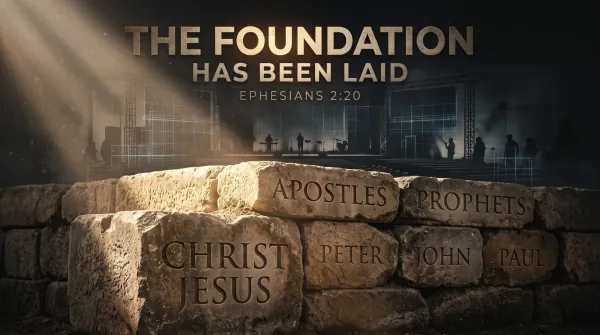
The Foundation Has Been Laid
Does the New Testament actually teach that modern apostles should exercise an apostolic office in the Church today?
That question has become increasingly important as apostolic movements such as Four12 have developed organized networks of churches and leaders who describe themselves as apostolic.
Four12 is quite clear about its position.
Its published material teaches that Christ continues to give apostles to the Church today. It describes the fivefold ministries of apostles, prophets, evangelists, pastors and teachers as continuing ministries and describes apostolic ministry as translocal—extending beyond an individual local church. Four12 also identifies its apostolic leadership as working worldwide.
Four12 does not claim that today's apostles are simply replacements for Peter, John or Paul. It explicitly distinguishes present-day apostles from the original apostles of the New Testament.
Instead, its argument is that although the original apostles had a unique foundational role, the apostolic ministry continues in another form.
That distinction is important.
It means the real question is not:
“Does Four12 believe it is the same as the Twelve?”
It doesn't.
The real question is:
Does the New Testament authorize a continuing apostolic office with the kind of translocal authority Four12 attributes to modern apostles?
Four12's primary biblical case leads us directly to Ephesians 4:11.
Paul writes:
“So Christ himself gave the apostles, the prophets, the evangelists, the pastors and teachers…”
At first glance, the argument seems compelling.
Christ gave apostles to His Church.
Their ministry equips believers.
Their ministry builds the body.
Their work continues until the Church reaches unity and maturity.
The Church has not yet reached perfect maturity.
Therefore, apostles must still exist.
But there is a major problem with stopping the argument there.
Ephesians 4:11 cannot be separated from Ephesians 2:20.
And Ephesians 2:20 says that the Church is:
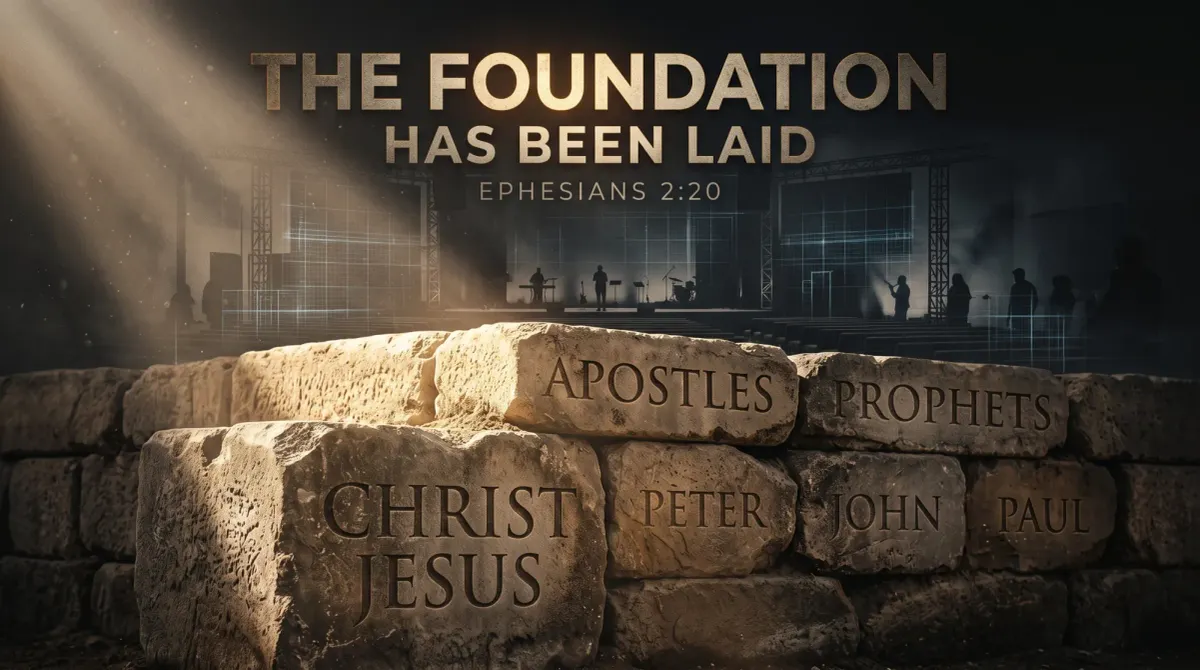
“built on the foundation of the apostles and prophets, with Christ Jesus himself as the chief cornerstone.”
That changes the question entirely.
If apostles are part of the foundation, we need to determine what Paul means by that foundation.
Because foundations are not normally laid over and over again.
They are laid so that something can be built upon them.
So the central question of this investigation is:
Does Ephesians 4:11 Establish Modern Apostles—or Does Ephesians 2:20 Tell Us the Apostolic Foundation Has Already Been Laid?
Four12's Claim About Modern Apostles
Before examining the biblical evidence, it is important to represent Four12 accurately.
Four12 describes itself as a second-generation apostolic movement and connects its understanding of modern apostolic ministry to Ephesians 4:11.
Its teaching distinguishes between the original apostles and present-day apostles.
According to Four12, today's apostles are not the original Twelve. Nevertheless, the apostolic ministry remains necessary for building and strengthening the Church. Four12 describes apostles as “master builders” who help apply God's blueprint for the Church. The term is used in 1 Corinthians 3:10, the Apostle Paul writes: "According to the grace of God which was given to me, like a wise master builder I laid a foundation, and another is building on it. But each man must be careful how he builds on it."
And it is used in Freemasonry but this does not mean that Four12 is associated with Freemasonry.
- Operative Freemasonry (Historical Guilds): In the Middle Ages and Renaissance, a master builder (or master mason) was the chief architect, engineer, and site supervisor in charge of monumental projects like cathedrals or Solomon’s Temple.
- Speculative Freemasonry (Modern Fraternity): In modern lodge tradition, the term is used metaphorically. Instead of cutting physical stone, a Mason is a "spiritual builder" who constructs an internal moral and ethical "temple" using virtues like justice, rectitude, and integrity.
It is interesting to note that, while Four12 denies any connection with the New Apostolic Reformation, the terminology used (master builders) is identical to the terminology used by the International Coalition of Apostolic Leaders (ICAL). Here is a screenshot of the ICAL home page at the time of writing this article.
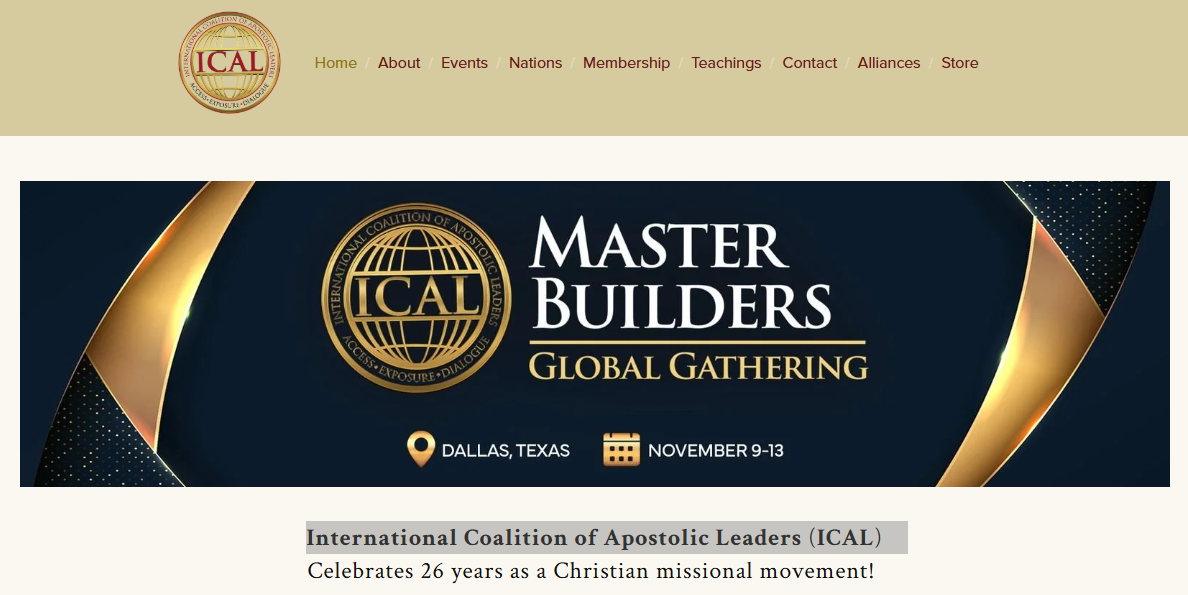
The International Coalition of Apostolic Leaders (ICAL) is a global association of charismatic Christian leaders and modern-day "apostles". Founded in 1999—originally under the name International Coalition of Apostles (ICA)—it serves as a peer network for apostolic leaders to connect, share strategic vision, and advance Christian ministry across religious, social, and commercial sectors.
Key Overview & History (ICAL)
- Origins: ICAL was established in 1999 following discussions among prominent charismatic leaders, including Dr. C. Peter Wagner and John P. Kelly. Kelly originally served as its convening leader before Wagner assumed management in 2001. In 2010, leadership transitioned back to John P. Kelly, who serves as the International Convening Leader.
- Rebranding: Originally named the International Coalition of Apostles, the organization rebranded to the International Coalition of Apostolic Leaders to place emphasis on apostolic function and leadership rather than title alone.
- Headquarters: ICAL is headquartered in the Dallas–Fort Worth metroplex in Texas, USA.
Core Objectives & Core Philosophy
| Dimension | Primary Focus |
| Three Pillars | Access (connecting global leaders), Exposure (sharing strategy/ideas), and Dialogue (fostering peer-to-peer discussion). |
| Governance Model | Operates as a voluntary fellowship of equals rather than a top-down hierarchy. It provides secondary accountability and relational connections rather than ecclesiastical "covering" or ordination. |
| Five-Fold Ministry | Rooted in Ephesians 4:11 (Apostles, Prophets, Evangelists, Pastors, Teachers), believing these roles are actively operating in the contemporary church. |
| Marketplace Apostles | Recognizes leadership outside traditional church walls, encouraging Christian influence across societal spheres (business, government, education, media, arts). |
Relationship to the New Apostolic Reformation (NAR)
ICAL is closely intertwined with the New Apostolic Reformation (NAR)—a movement within charismatic Christianity that emphasizes restoration of the offices of apostle and prophet, 24/7 prayer, and transforming societal spheres through faith. C. Peter Wagner, one of ICAL's early primary architects, was also the main theologian who coined and popularized the term "New Apostolic Reformation".
Organizational Structure & Reach
- Global & National Coalitions: ICAL serves as an umbrella network for region-specific coalitions (such as ICAL USA, along with national branches across Latin America, Asia, Europe, and Africa).
- Roundtables & Gatherings: Members connect through regional roundtables and the annual MasterBuilders Global Gathering, held in Texas, where global delegates meet for strategy sessions and fellowship.
- Membership: Membership is by invitation or application and is intended specifically for recognized leaders overseeing churches, regional networks, or marketplace enterprises.
While both organizations believe in the contemporary restoration of five-fold ministry—specifically the office and role of modern-day apostles (Ephesians 4:11–12)—they operate as entirely separate networks with distinct origins, theological emphasis, and structural models.
Comparison of the Two Networks
| Dimension | International Coalition of Apostolic Leaders (ICAL) | Four12 Global |
| Primary Identity | A peer-to-peer association/coalition of individual apostles, bishops, and marketplace leaders. | A global network and partnership of local churches working together to equip saints and plant/restore churches. |
| Origins | Founded in 1999 (USA) by leaders like C. Peter Wagner and John P. Kelly. | Founded in 2011 (South Africa) by Andrew Selley (after leaving New Covenant Ministries International / NCMI). |
| Relationship to the NAR | Directly birthed out of the New Apostolic Reformation (NAR) movement under C. Peter Wagner. | Distinct from NAR networks. Four12 explicitly pushes back against blanket labels linking all charismatic or apostolic churches to the NAR. |
| Model of Governance | Membership organization for leaders, offering relational connection rather than church oversight. | Voluntary partnership model where apostolic teams partner with elderships of local churches to bring equipping and alignment. |
Distinctions to Keep in Mind
- Independent History: Four12 emerged independently through leader Andrew Selley and Joshua Generation Church. It did not branch off from ICAL or C. Peter Wagner's apostolic coalitions.
- Pushback on "Guilt by Association": Four12 has addressed the confusion surrounding apostolic movements, emphasizing in its publications that carrying an apostolic worldview or restoring Ephesians 4:12 ministry does not automatically tie a church to NAR organizations like ICAL.
- Overlap: Individual leaders within charismatic Christianity occasionally hold personal relationships across different networks, but Four12 as an entity maintains its own leadership structure, conferences, and oversight independently of ICAL.
Back to our discussion of Four12 and it's apostolic claims ...
Four12 also describes the fivefold ministries as translocal offices.
In its teaching, these ministries operate beyond the boundaries of individual local congregations and can carry authority beyond a single church.
Its material on the ministry and role of the apostle goes further, describing apostles as having a unique grace and, in some cases, representing government or rule with translocal authority.
This is therefore not merely a discussion about whether some Christians are unusually gifted at church planting.
It concerns office, authority and governance.
And that makes the biblical foundation of the claim critically important.
Ephesians 4:11 and the Fivefold Ministry
Paul's statement in Ephesians 4:11 is straightforward:
“So Christ himself gave the apostles, the prophets, the evangelists, the pastors and teachers…”
There is no question that apostles appear in the list.
The question is what Paul intends the list to establish.
Does it mean that all five ministries must continue as offices throughout the entire Church age?
Or is Paul describing the ministries Christ gave to equip His Church, while the New Testament as a whole establishes different functions and durations for those ministries?
This distinction matters because a passage mentioning an office does not automatically establish every possible characteristic of that office.
The text must be interpreted alongside everything else Scripture says about it.
That is especially important with apostles.
The New Testament gives us substantially more information about apostleship than Ephesians 4:11 alone.
It tells us:
- how apostles were commissioned;
- what qualified someone to be an apostle;
- what distinguished apostolic authority;
- what signs accompanied genuine apostleship;
- how false apostles were exposed;
- and how the apostolic ministry related to the foundation of the Church.
Those passages cannot simply be ignored because Ephesians 4:11 mentions apostles.
Does “Until” Prove That Apostles Continue?
One of the strongest arguments for modern apostles comes from Ephesians 4:13.
Paul says these ministries operate:
“until we all reach unity in the faith and in the knowledge of the Son of God and become mature…”
The argument is:
- Apostles are given to the Church.
- Their ministry continues until maturity.
- The Church has not yet reached perfect maturity.
- Therefore apostles must continue today.
This is an understandable argument.
But the word “until” does not settle the question by itself.
Paul is explaining the purpose of Christ's provision for the Church: believers are to be equipped, the body is to be built up, and Christians are to mature into Christ.
The passage establishes the goal and purpose of ministry.
It does not independently establish the precise duration, authority or form of every ministry listed in verse 11.
For that, we must look at the rest of the New Testament.
And when we do, we encounter something that the modern-apostolic argument must take seriously:
The apostles are repeatedly associated with the foundation of the Church.
Ephesians 2:20 and the Apostolic Foundation
Earlier in Ephesians, Paul describes the Church as:
“built on the foundation of the apostles and prophets, with Christ Jesus himself as the chief cornerstone.”
This is not incidental language.
Paul is describing the architecture of the Church.
Christ is the cornerstone.
The apostles and prophets are associated with the foundation.
The Church is built upon that foundation.
That raises a simple but profound question:
If the apostles are part of the foundation, when is the foundation finished?
A foundation has a purpose.
It establishes the base upon which the rest of the structure is built.
The New Testament does not describe an endless cycle in which new apostles repeatedly become part of a continually expanding doctrinal foundation.
Instead, Paul speaks of a foundation that has already been laid.
And his language in 1 Corinthians makes this even clearer.
Paul Describes Himself as a Foundation-Laying Builder
Paul writes:
“By the grace God has given me, I laid a foundation as a wise builder, and someone else is building on it.”
— 1 Corinthians 3:10
This is one of the most important verses in the entire discussion.
Paul says:
I laid a foundation.
Then:
Someone else is building on it.
There is a distinction between the person who lays the foundation and those who build upon it.
Paul then immediately says:
“For no one can lay any foundation other than the one already laid, which is Jesus Christ.”
— 1 Corinthians 3:11
The ultimate foundation is Christ.
The apostles did not create a foundation independent of Christ.
They laid the foundational apostolic witness concerning Christ.
But once that foundation is laid, subsequent ministers are called to build upon it.
That distinction is crucial.
Foundation laying is not the same thing as building upon an existing foundation.
The Apostolic Foundation Is Not a Continuing Construction Project
This is where the modern-apostolic model deserves careful examination.
Four12 acknowledges the foundational role of the original apostles but argues that modern apostles continue the apostolic work in a different form.
That raises an important question:
What exactly are modern apostles laying?
If they are laying a new foundation, Paul says no other foundation can be laid.
If they are not laying a new foundation, then what makes their work uniquely apostolic rather than the work of church planters, missionaries, teachers, elders or other mature Christian leaders?
The distinction matters because the title apostle carries authority.
If someone is simply a gifted church planter, there is no biblical problem with recognizing the person's gifting.
But if that person is called an apostle and the title carries translocal authority over churches, the biblical basis for that office must be demonstrated.
The Apostles Were Not Merely Senior Church Leaders
The New Testament gives us another reason to be cautious about equating modern translocal leadership with biblical apostleship.
When the early Church replaced Judas, the apostles established unusually specific qualifications.
Peter said the replacement needed to be someone who had accompanied them from the baptism of John through Jesus' ascension and could become:
“a witness with us of his resurrection.”
— Acts 1:22
This is extraordinary.
The qualification was not:
- excellent leadership;
- church-planting ability;
- organizational skill;
- prophetic gifting;
- theological education;
- international influence;
- or recognition by established leaders.
The qualification was tied to eyewitness testimony of Christ and His resurrection.
That tells us something important about the apostolic office.
The apostles were not merely the senior executives of the first-century Church.
They were authoritative witnesses to the risen Christ.
Paul's Apostleship Was Not Given by Men
Paul makes the same point about his own apostleship.
He begins Galatians:
“Paul, an apostle—not from men nor through man, but through Jesus Christ and God the Father…”
Paul's authority did not originate with a church network.
It did not originate with a committee.
It did not originate with another apostle.
His apostleship was rooted in Christ's commissioning.
Paul also asks the Corinthians:
“Am I not an apostle? Have I not seen Jesus our Lord?”
His encounter with the risen Christ was integral to his apostolic identity.
This does not mean every New Testament reference to “apostle” carries exactly the same circumstances.
It does mean we should be extremely careful about transferring the title and authority to modern leaders without establishing the biblical basis for doing so.
But Weren't There Apostles Other Than the Twelve?
Yes.
And any serious discussion of this subject must acknowledge that.
Barnabas, for example, is called an apostle in Acts 14:14.
Paul himself was an apostle without being one of the original Twelve.
Therefore, it would be inaccurate to argue:
“Only the Twelve could ever be apostles.”
The New Testament's use of apostolic terminology is broader than that.
But this observation does not automatically prove the existence of a continuing modern apostolic office.
The real question is more precise:
Does the New Testament establish an ongoing office of translocal apostles possessing continuing authority to build, correct, establish and oversee churches throughout the Church age?
That is the claim that must be demonstrated.
And simply pointing to Acts 14:14 does not demonstrate it.
“Modern Apostles Are Different”
This is where Four12's distinction becomes important.
Four12 openly acknowledges that present-day apostles differ from the original apostles.
That is actually helpful.
It means the debate can move beyond the simplistic question of whether today's leaders claim to be one of the Twelve.
They don't.
The real question becomes:
Where does Scripture establish this second category of apostle?
If modern apostles:
- do not have the same qualifications;
- do not have the same commissioning;
- do not perform the same foundational role;
- do not possess the same revelatory authority;
then what biblical text establishes their continuing office?
The burden of proof lies with the claim.
It is not enough to show that the Church needs good leaders.
Signs of a True Apostle
Paul gives us another significant piece of evidence.
He writes:
“The things that mark an apostle—signs, wonders and miracles—were performed among you with great perseverance.”
— 2 Corinthians 12:12
Paul calls these things “the signs of a true apostle.”
That does not mean miracles alone prove someone is a genuine apostle.
Scripture explicitly warns about false teachers and deceptive supernatural claims.
Doctrine matters.
Character matters.
Faithfulness to the gospel matters.
But Paul's statement cannot simply be dismissed.
So if someone claims the continuing office of apostle, a reasonable biblical question is:
Where are the signs of a true apostle?
If the modern definition of apostle is so different from Paul's definition that Paul's tests no longer apply, then the movement needs to explain why the same title should still be used.
The Danger of Redefining Apostleship
There is a potential circular argument that deserves attention.
It goes something like this:
"Modern apostles are not required to meet the qualifications of the original apostles because they are a different kind of apostle."
But then we must ask:
Where does Scripture establish this different kind of apostle?
Otherwise the argument risks becoming self-validating.
A new definition is created.
The original biblical qualifications are declared irrelevant to that new definition.
Then the new definition is used to prove that the office continues.
That is not sufficient biblical evidence.
The question is not whether modern leaders can perform valuable ministry.
They can.
The question is whether Scripture gives us warrant to call that ministry a continuing apostolic office carrying special authority.
Four12's “Master Builders”
Four12 uses another revealing expression.
It describes apostles as “master builders.”
Its teaching presents apostles as people who help churches build according to God's blueprint.
Other Four12 material says apostles can help identify what is missing in a church and determine what needs to be strengthened or corrected.
This makes the authority question unavoidable.
If a modern apostle has the authority to determine whether a church is being built according to God's blueprint, then that apostle is exercising considerably more than ordinary pastoral influence.
The obvious questions become:
Who evaluates the apostle?
Who determines whether the apostle's interpretation of the blueprint is correct?
Who corrects the apostle when he is wrong?
Who can remove the apostle?
Those questions become increasingly important as apostolic ministry becomes increasingly translocal.
The Translocal Authority Question
Four12 explicitly describes its fivefold ministries as translocal offices.
Its teaching says these leaders minister beyond a single local church and carry God-given authority in that wider sphere.
Its material on the apostle describes some apostolic leaders as having authority extending across churches and regions.
This is precisely why the debate cannot remain at the level of terminology.
A title becomes significant when it carries authority.
If a leader simply says:
“I have a heart for churches in different countries.”
That is not controversial.
But if the claim becomes:
“Christ has given me an apostolic office carrying authority to establish, correct and oversee churches beyond my local congregation,”
then Scripture must be able to support that claim.
The more extensive the authority, the greater the need for biblical clarity.
The Global Apostolic Model
Four12 identifies its apostolic leadership as working worldwide.
That global dimension makes the issue even more significant.
A local elder has a defined congregation.
A local pastor has identifiable responsibilities.
But translocal apostolic authority potentially crosses congregational, regional and national boundaries.
So we must ask:
Where does the New Testament establish a permanent worldwide hierarchy of modern apostles exercising this kind of authority?
Again, this does not mean that international ministry is unbiblical.
It is not.
Paul himself traveled extensively.
Missionaries traveled.
Teachers traveled.
Churches communicated across regions.
The issue is not international ministry.
The issue is whether international ministry requires an apostolic office with special authority.
Those are not the same thing.
Who Has the Authority to Test an Apostle?
This may be the most important practical question of all.
If someone claims to be a modern apostle, who is allowed to test that claim?
The New Testament provides a remarkably strong answer:
The claim must be tested.
Jesus commended the church at Ephesus because:
“You have tested those who claim to be apostles but are not, and you have found them false.”
— Revelation 2:2
Think about the significance of that statement.
There were people who claimed apostolic authority.
And they were wrong.
The title did not authenticate itself.
The claim had to be tested.
That principle is absolutely relevant to contemporary apostolic movements.
Apostolic Authority Does Not Place Anyone Above Testing
The New Testament never establishes a category of Christian leader who is beyond examination.
The Bereans examined teaching against Scripture.
Paul warned about false apostles.
John commanded believers to test spiritual claims.
Jesus commended Ephesus for testing those who claimed to be apostles.
Paul himself confronted Peter when Peter's behavior compromised the gospel.
The biblical pattern is therefore not:
Claim the title → receive authority → become exempt from scrutiny.
It is:
Make the claim → submit it to biblical testing → demonstrate faithfulness → remain accountable.
That distinction becomes particularly important wherever apostolic authority is concentrated in a network of relationships.
The Fivefold Ministry Does Not Automatically Mean Five Permanent Offices
Another assumption deserves examination.
The phrase “fivefold ministry” is widely used to describe Ephesians 4:11.
But the phrase itself is not found in the biblical text.
It is a theological description of the five ministry categories Paul lists.
That does not make the concept illegitimate.
But it means we should not allow the label to settle the argument before we examine the text.
Ephesians 4:11 gives us five categories:
- apostles;
- prophets;
- evangelists;
- pastors;
- teachers.
The passage then explains their purpose:
“to equip his people for works of service, so that the body of Christ may be built up…”
The purpose is clear.
But several additional questions remain:
- Does each category constitute a permanent office?
- Does each category continue in exactly the same form?
- Does each category possess the same level of authority?
- Is each category translocal?
- Does each category exercise authority over local elders?
- Does the apostolic category retain the same authority as the foundational apostles?
Those questions cannot be answered merely by saying:
“Ephesians 4:11 lists five ministries.”
Apostolic Ministry Is Not the Same as Apostolic Office
This distinction may ultimately resolve much of the confusion.
The Church absolutely needs people who perform ministry that could reasonably be described as apostolic in character.
People establish churches.
People cross cultural boundaries.
People strengthen struggling congregations.
People train leaders.
People defend the gospel.
People establish new works.
People travel internationally to serve churches.
All of that can happen without establishing a continuing apostolic office.
A missionary can be sent.
A church planter can plant churches.
A teacher can correct doctrine.
An elder can shepherd believers.
A mature leader can serve multiple churches.
The question is whether the additional title carries an additional authority that Scripture actually assigns.
The Foundation Has Already Been Laid
We can now bring the pieces together.
Ephesians 2:20
The Church is built on the foundation of the apostles and prophets, with Christ as the cornerstone.
1 Corinthians 3:10
Paul describes himself as a foundation-laying builder.
1 Corinthians 3:11
No other foundation can be laid beyond the one already laid—Jesus Christ.
Acts 1:21–22
The replacement apostle had to be a witness of Christ's ministry and resurrection.
Galatians 1:1
Paul's apostleship was not from men but through Jesus Christ.
1 Corinthians 9:1
Paul connects his apostleship with having seen the Lord.
2 Corinthians 12:12
Signs, wonders and mighty works are associated with genuine apostleship.
Revelation 2:2
Those who claim to be apostles can be tested and found false.
Taken together, these passages create a serious challenge to the assumption that Ephesians 4:11 automatically establishes a continuing office of modern apostles with translocal authority.
The question is not whether Christ still builds His Church.
He does.
The question is whether He continues to appoint apostles in the same authoritative office, or whether the apostolic foundation has already been established and the Church is now called to build upon it.
The Question Four12 Must Answer
Four12 has been unusually clear about its position.
It teaches that:
- modern apostles exist
- they differ from the original apostles
- apostolic ministry remains necessary
- apostles can function translocally
- apostolic leaders can work across nations
- apostles can help establish and strengthen churches
- apostles can help identify what is missing in churches
- apostles help churches build according to God's blueprint
The question is therefore not whether Four12 has a coherent model.
It does.
The question is:
Where Does Scripture Establish That Model?
Where does Scripture say that after the foundational apostles completed their work, Christ would establish a continuing worldwide office of translocal apostles?
Where does Scripture say that these apostles would possess authority to evaluate and correct the foundations of local churches?
Where does Scripture describe a continuing succession of “master builders” possessing this special authority?
Where does Scripture establish the mechanism by which such apostles are to be recognized, tested, corrected and removed?
These are not unreasonable questions.
They are precisely the questions that should be asked whenever someone claims extraordinary spiritual authority.
The Church Does Not Need a New Foundation
The Church certainly needs leadership.
It needs pastors.
It needs teachers.
It needs evangelists.
It needs missionaries.
It needs elders.
It needs church planters.
It needs mature Christians who can strengthen churches across borders.
It needs people who courageously confront error.
But none of this requires a new apostolic foundation.
The foundation is Christ.
The apostles bore authoritative witness to Christ.
That apostolic witness has been preserved for the Church in Scripture.
The Church is therefore called to remain faithful to the foundation—not continually search for new foundational authorities.
This distinction is critical.
The Church needs people to build.
It does not need people to become a new foundation.
The Question We Cannot Avoid
The modern apostolic movement asks Christians to accept something significant:
That Christ continues to appoint apostles who possess a distinctive office, special grace and translocal authority for the building and oversight of His Church.
Four12 is transparent about that claim.
But transparency does not make the claim biblical.
The claim must be tested against Scripture.
And when Ephesians 4:11 is read together with Ephesians 2:20, 1 Corinthians 3:10–11, Acts 1:21–22, Galatians 1:1, 1 Corinthians 9:1, 2 Corinthians 12:12 and Revelation 2:2, we discover that the question is far more complicated than:
“Does Ephesians 4:11 mention apostles?”
Of course it does.
But he real question is:
What kind of apostles is Paul talking about—and does Scripture actually teach that their office continues today with translocal authority?
That is the question the modern apostolic movement must answer.
And it cannot be answered by Ephesians 4:11 alone.
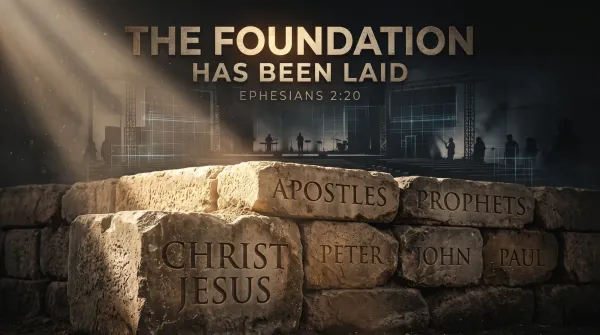
The Foundation Has Been Laid
Paul's imagery is difficult to escape.
A foundation is laid.
A cornerstone is established.
Then the building rises upon it.
Paul says he laid a foundation.
He says no other foundation can be laid beyond the one already laid.
And Ephesians says the Church is built upon the foundation of the apostles and prophets, with Christ Himself as the cornerstone.
So perhaps the question we should be asking is not:
“Where are today's apostles?”
Perhaps we should first ask:
“Why does the Church need another foundation?”
If the foundation has already been laid, the Church does not need another generation of foundation-laying apostles.
It needs faithful builders.
Builders who remain faithful to Christ.
Builders who remain faithful to Scripture.
Builders who refuse to elevate themselves above the foundation.
Builders who understand that the Church belongs to Christ—not to apostles, prophets, networks or movements.
The foundation has been laid.
Now the question is whether the modern apostolic movement is faithfully building upon it—or claiming a place within it.
We will continue the Four12 Investigation
Part 2 — The Foundation Problem: Why Ephesians 2:20 Matters for Modern Apostles
Part 3 — “Signs of a True Apostle”: What Does 2 Corinthians 12:12 Actually Mean?
Part 4 — “Those Who Call Themselves Apostles”: Revelation 2:2 and the Biblical Duty to Test Leaders
Part 5 — Repentance Is Not a Get-Out-of-Accountability Card
Part 6 — Who Holds the Apostles Accountable? Testing Four12's Accountability Model
Action Steps:
Subscribe: Join other watchmen who receive these deep dives directly in their inbox.
This research is 100% viewer-supported. If this article helped you, consider partnering with our mission to help us keep the lights on.