Apostolic Alignment: The New Authority Structure in the Church
Unmasking the machinery of NAR governance. We dive deep into the 'Apostles and Prophets' movement to expose how 'spiritual covering' and the New Apostolic Reformation's vertical alignment are dismantling local church autonomy and biblical accountability.


If you have spent any time in a traditional church, you likely understand the concept of Eldership. It is a biblical model of plural leadership where a group of qualified men (1 Timothy 3) govern the local church together, accountable to one another and the Word of God.
But in the world of the New Apostolic Reformation (NAR), this model is being replaced by something entirely different. It is called Apostolic Alignment.
It sounds spiritual. It sounds orderly. But beneath the surface, it is a radical departure from the New Testament church. It is a shift from the Sufficiency of Scripture to the Authority of a Person.
1. From "Servant-Leader" to "Governing Apostle"
The most visible change in an NAR-influenced church is the elevation of the Senior Pastor to the office of Apostle.
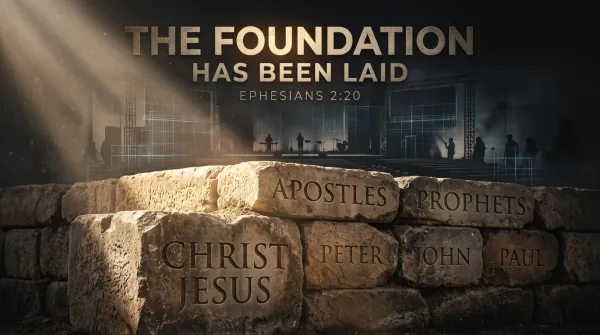
In biblical terms, the Apostles of the first century were eyewitnesses of the resurrected Christ (Acts 1:21-22) whose teachings form the foundation of our faith. Once the New Testament was completed, the "office" of Apostle—as a source of new, governing revelation—closed.
The NAR teaches the opposite. They argue that around the turn of the 21st century, God restored the governing office of Apostle to the church. These modern Apostles are not just "church planters"; they are seen as Legislators. They believe they have the authority to:
- Establish Doctrine: Issuing "New Revelations" that are often prioritized over the Bible.
- Decree and Declare: Making spiritual "pronouncements" that supposedly change the physical world.
- Demand Alignment: Requiring leaders and members to "align" their lives and finances under the Apostle’s vision.
2. The Trap of "Spiritual Covering"
The engine that drives Apostolic Alignment is a concept known as Spiritual Covering.
In NAR theology, your spiritual safety, success, and even your "blessing" are tied to your submission to a human leader. You are told that if you are not "covered" by an Apostle, you are vulnerable to demonic attack and "out of order" with God.
The Scriptural Redefinition
NAR teachers often misuse the story of David and Saul or the relationship between Elijah and Elisha to justify this. They claim that "rebellion is as the sin of witchcraft," and that questioning the Apostle's vision is a sign of a "religious spirit."
However, the Bible teaches that Christ is the only head of the Church (Colossians 1:18). Our "covering" is the finished work of Jesus, not the endorsement of a man in an expensive suit. When a leader demands that you "align" with their vision before you align with the Word, they aren't acting as a pastor; they are acting as a mediator—a role that belongs to Christ alone.
3. The End of Local Accountability
Traditional biblical eldership is a "safety net." When multiple elders govern, one man’s ego or error can be corrected by the others.
Apostolic Alignment destroys this safety net.
When a church aligns with an NAR network, the local elders are often downgraded to "advisory boards." They no longer have the power to hold the Pastor/Apostle accountable because the Pastor/Apostle answers to a "Lead Apostle" in another city or state.
This creates a Horizontal Gap:
- The congregation cannot hold the Pastor accountable (because he is the "Anointed").
- The local board cannot hold the Pastor accountable (because they are under his "Covering").
- The Lead Apostle won't hold the Pastor accountable (because they are part of the same profitable network).
This is how financial scandals, moral failures, and theological drift go unchecked for years. The "Berean spirit" (Acts 17:11), which tests everything against Scripture, is replaced by an "Honor Culture" that forbids questions.
4. The Financial Engine of Alignment
We must address the practical side of this shift. Apostolic Alignment is rarely just spiritual; it is almost always financial.
In many NAR networks, "Alignment" requires the local church to send a percentage of its tithes (often 10%) upward to the "Apostle" who covers them. This is sometimes called "Tithing to the Storehouse."
This creates a global franchise model. The local church becomes a "distribution center" for the Lead Apostle’s books, conferences, and curriculum. The goal shifts from Discipleship (building mature Christians) to Expansion (building the Apostle’s "Kingdom").
5. Identifying the Shift: Red Flags
How do you know if your church has moved from biblical eldership to Apostolic Alignment? Look for these signs:
- Language of Submission: Does the leadership talk constantly about "Honoring the Anointing" or "Aligning with the Vision"?
- The "Moses" Model: Is the pastor portrayed as the only one who hears from God, while the congregation's job is to "carry his bags" or "run with his vision"?
- Lack of Recourse: If you have a biblical concern, is there a clear, transparent process to address it, or are you told you are "out of alignment"?
- External Sovereignty: Does your church answer to a distant "Apostolic Network" rather than being governed by local, biblically qualified men?
6. The Remedy: Returning to the Head
The remedy for the deception of Apostolic Alignment is simple but difficult: Reclaiming the Headship of Christ.
The New Testament does not describe the church as a corporate pyramid. It describes it as a Body. While there are roles and functions (including pastors and teachers), no human leader is the "source" of another believer's spiritual life.
If you are in a system where your "blessing" is dependent on your "alignment" with a man, you are not in a New Testament church—you are in a personality cult. The "covering" you need has already been provided at Calvary.
The Watchman's Call: This week, examine the structure of your church. Does it look like the plural, accountable eldership of the Book of Acts, or does it look like a corporate empire built on "Apostolic" decree? It’s time to stop aligning with men and start aligning with the Truth.
Seeing this red flag in your own congregation? Reach out to us here.
Action Steps:
- Check the Glossary: Visit our NAR Glossary to see if your church is using these redefined terms.
- Compare the Claims: Read our 10 Signs of Church Drift to see if these patterns exist in your congregation.
- Subscribe: Don't Miss a Single Reveal! The unmasking is just beginning. Join over 1,000+ watchmen who receive these deep dives directly in their inbox.
This research is 100% viewer-supported. If this article helped you, consider partnering with our mission to help us keep the lights on.