The Digital Idol: Unmasking the "Political Christ
When we clothe human ambition in the robes of the Savior, we don't sanctify politics—we profane Christ. An urgent look at the 'Digital Idol' and the death of sincerity in leadership.

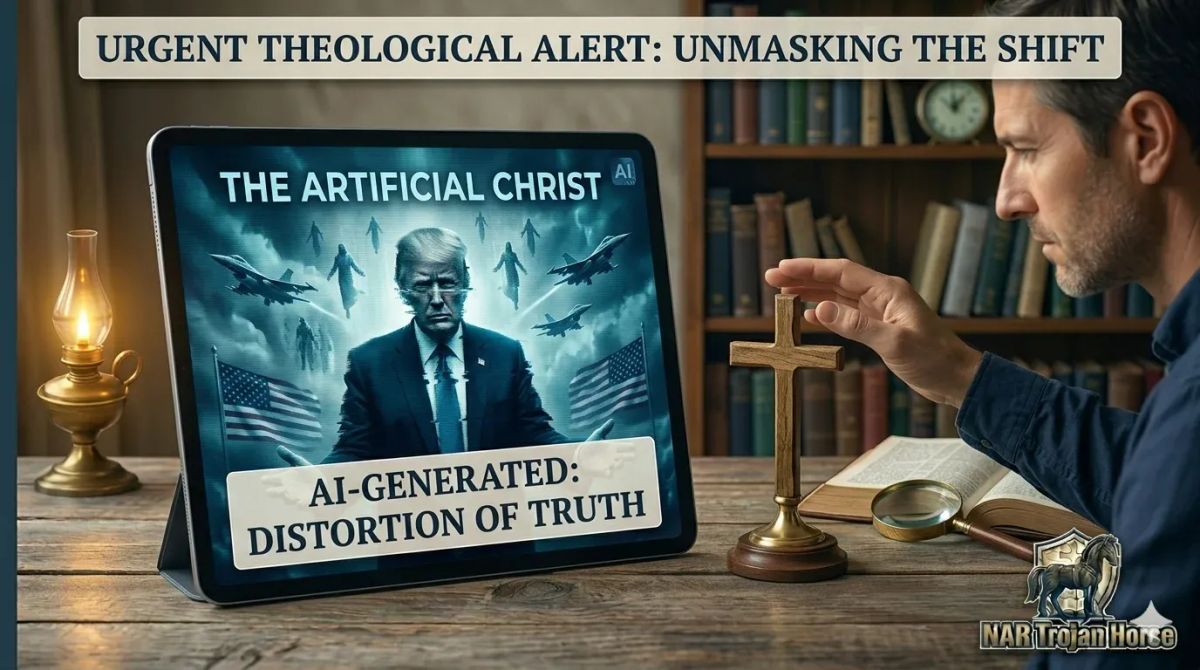
The digital landscape has shifted. While many are debating the latest political "Pope-slamming" or partisan social media posts, a much deeper theological fracture has appeared. I am not writing to join the political fray, but to address a profound problem for the witness of the Church—a moment that signals a crisis in our national discourse and leadership.
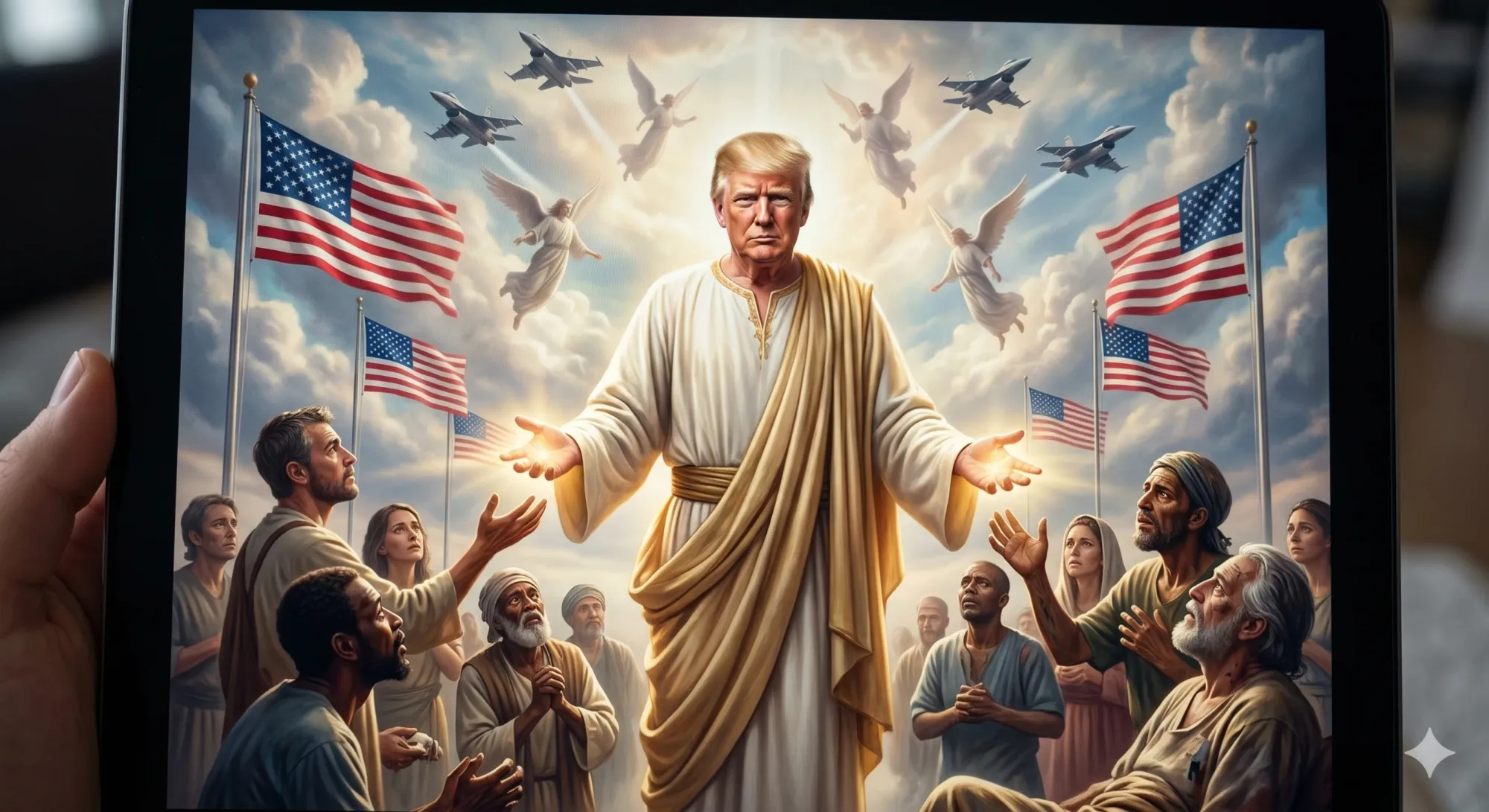
The flashpoint was an AI-generated image: the President, draped in biblical robes and bathed in celestial light, assuming the posture of Christ. Surrounded by angelic figures, fighter jets, and national flags, he is portrayed as a miracle-worker for the modern age. While some dismiss this as a regular occurrence in his digital fundraising, the frequency of such imagery should not lead to our indifference. It should lead to our alarm.
The Death of Sincerity in the Age of "Trolling"
We are living in an era where accountability is being suffocated by the claim that everything is "just satire." When a leader shares a blasphemous or outrageous image, the defense is immediate: He’s just owning the libs. It’s a joke. Don’t be so literal.
But we must ask: if sincerity is permanently optional, how do we ever measure truth? When we accept a framework where leaders bear no responsibility for their communications, we aren't building a freer society; we are building one where trust is impossible. For a people who serve the One who is the Truth, the dismissal of truth-telling as "trolling" is not a political strategy we can afford to endorse.
Sovereignty is Not an Endorsement
It is a cornerstone of Reformed theology that God is sovereign over the rise and fall of rulers. Daniel and Romans 13 leave no room for doubt: God raises up leaders. But the biblical witness reminds us that God's appointment of a ruler is not always a badge of divine approval.
Scripture gives us a sobering gallery of leaders raised up for purposes other than blessing:
- Pharaoh was raised up as a vessel of judgment to display divine power.
- Nebuchadnezzar was raised up to be humbled, eventually eating grass like an animal until he acknowledged the Most High.
- Saul was granted to Israel as a concession to a people who demanded a king like the nations around them.
To assume a leader is a reward for our faithfulness—rather than a mirror held up to our compromise—is a dangerous presumption. Is it possible we have been given a leader who perfectly embodies our own addiction to spectacle and our preference for combativeness over character?
The Constantinian Shadow
The most troubling aspect of this moment isn't the social media post itself—it is the silence of the shepherds. There was a time when the Church insisted that personal character was the bedrock of public leadership. The speed with which that conviction was bartered for political access reveals a deep spiritual rot.
When we allow the Cross to be wedded to the sword of national power, the Gospel is always the casualty. This is the "Constantinian temptation" rebranded for the digital age. By allowing a political leader to be clothed in the robes of the Savior, we aren't sanctifying our politics; we are profaning the name of the One we claim to follow.
The Collateral Damage to Our Witness
Beyond the theological errors, we must reckon with the devastating cost to our collective testimony. When the Church remains silent—or worse, celebratory—in the face of such blatant narcissism, we signal to a watching world that our God is small enough to be bought for a seat at the table of power. To the outsider, the Cross is no longer a symbol of selfless love and redemption; it has been rebranded as a political badge of combativeness. We are trading our "salt and light" for "spectacle and noise," and we should not be surprised when the world rejects a Gospel that we have reduced to a nationalistic accessory. We aren't just losing our influence; we are losing our integrity.
The Great Transaction: Trading Holiness for Access
What is most grieving is the sight of so-called Christians prepared to ignore a mountain of blasphemies in exchange for political leverage. This is a transactional faith that treats the holiness of God as a bargaining chip. When we look the other way while a leader drapes himself in the robes of our Savior simply because he promises to protect our "interests," we become the very money-changers Jesus drove out of the Temple. You cannot ignore the mockery of Christ today and expect the world to believe you follow Him tomorrow. Sacrificing the reputation of the Gospel for a political win is not "shrewdness"—it is spiritual adultery.
Our Higher Allegiance
The point I must convey to my brothers and sisters in Christ is this: We are not called to worship a nation, a flag, or a politician. Our first and final allegiance belongs exclusively to our true Lord and Savior, Jesus Christ. Any leader who demands—or accepts—the devotion only God deserves is not a blessing; they are an idol that will eventually destroy those who bow to them. When our loyalty to a man rivals our devotion to the King of Kings, we have committed high treason against the Kingdom of God. Choose this day whom you will serve: the unchanging Word of Truth or the fleeting, digital idols of this age.
Seeing this red flag in your own congregation? Reach out to us here.
Action Steps:
- Check the Glossary: Visit our NAR Glossary to see if your church is using these redefined terms.
- Compare the Claims: Read our 10 Signs of Church Drift to see if these patterns exist in your congregation.
- Subscribe: Don't Miss a Single Reveal! The unmasking is just beginning. Join over 1,000+ watchmen who receive these deep dives directly in their inbox.
This research is 100% viewer-supported. If this article helped you, consider partnering with our mission to help us keep the lights on.